
Antarctica Cruises: The Ultimate Luxury Expedition Guide
Updated: Jul 5

Antarctica is one of the few places left on Earth that still feels untouched. No cities. No crowds. No noise—just the sound of ice cracking in the distance and the echo of a penguin’s call across the water.
It’s not just a destination you visit. It’s something you experience. You don’t simply see Antarctica—you step onto its ice. You watch towering glaciers crash into the sea. You sit quietly in a Zodiac boat as a humpback whale surfaces just feet away.
And that’s exactly why planning this trip matters so much. In Antarctica, how you go shapes everything you experience—from how much time you get on land, to the wildlife you encounter, to how immersive and comfortable your journey feels.
In this comprehensive guide, I’ll walk you through everything you need to know to plan an unforgettable luxury cruise to Antarctica, including:
How to Get There: The two main ways to reach Antarctica (and which might be right for you).
Choosing a Route: Popular cruise itineraries (Antarctic Peninsula vs. South Georgia, etc.) and their differences.
Picking the Right Ship: Why ship size and style (luxury vs. expedition) matter for your experience.
Pricing and Value: What an Antarctica cruise typically costs, and how to get the best value for your investment.
When to Go: Seasonal differences (wildlife, weather, daylight) in Antarctica.
Essential Travel Tips: Critical info like insurance, health, weather, gear, and why an experienced advisor can make all the difference.
Let’s turn your Antarctic dream into a well-planned adventure of a lifetime!
How Do You Get to Antarctica?

Getting to Antarctica isn’t as simple as booking a direct flight to a big city—because there are none. There are two main ways to reach Antarctica as a traveler, and both involve some adventure by necessity. The route you choose shapes your entire experience, so it’s one of the first major decisions in planning your trip.
Option 1: Sail from South America (via the Drake Passage) – The classic expedition approach. This is how roughly 90% of travelers reach Antarctica today. Nearly all Antarctic cruises depart by ship from the southern tip of South America, most often from Ushuaia, Argentina (the world’s southernmost city). From Ushuaia, ships embark on a two-day crossing of the Drake Passage – the stretch of ocean between Cape Horn and the Antarctic Peninsula. For adventurous souls, crossing the legendary Drake Passage is a memorable part of the story: you’ll feel the air grow sharper and the light shift as you sail south, and often wake up to icebergs on the horizon by the third day. Be warned, however—the Drake is known for rough seas (affectionately nicknamed the “Drake Shake” when it’s stormy, versus the rare “Drake Lake” when it’s calm). If you’re prone to seasickness or short on time, the Drake’s two-day crossing each way reduces your time on the continent to some degree. (On a typical 10-day itinerary, nearly 4 days are spent at sea in the crossing.) But for many, this traditional route offers a sense of true expedition and anticipation—earning your way to Antarctica like the explorers of old.

Option 2: Fly to Antarctica (via Punta Arenas, Chile) – The modern “Fly-Cruise” solution. A number of specialty expedition cruise lines offer programs that let you fly to King George Island, just off the Antarctic Peninsula, where you then board your ship. These charter flights typically depart from Punta Arenas, Chile, and take about 2 hours to land you on the White Continent. The big advantage is saving time (no ocean crossing) and avoiding the Drake Passage, so you can start exploring Antarctica immediately. Essentially, you swap the two-day high-seas journey for a quick flight and gain extra days on the Peninsula. The trade-off? Fly-cruise packages usually cost ~20% more due to the included charter flights and added logistics, and they require some flexibility – flights to Antarctica are weather-dependent and can be delayed by a day or more if conditions aren’t safe (you’ll typically spend at least one night in Punta Arenas or nearby Puerto Williams awaiting a clear weather window). But if you’re short on vacation time or very concerned about seasickness, flying to Antarctica can be ideal. It’s especially popular with families, senior travelers, and anyone who prefers a smoother journey.
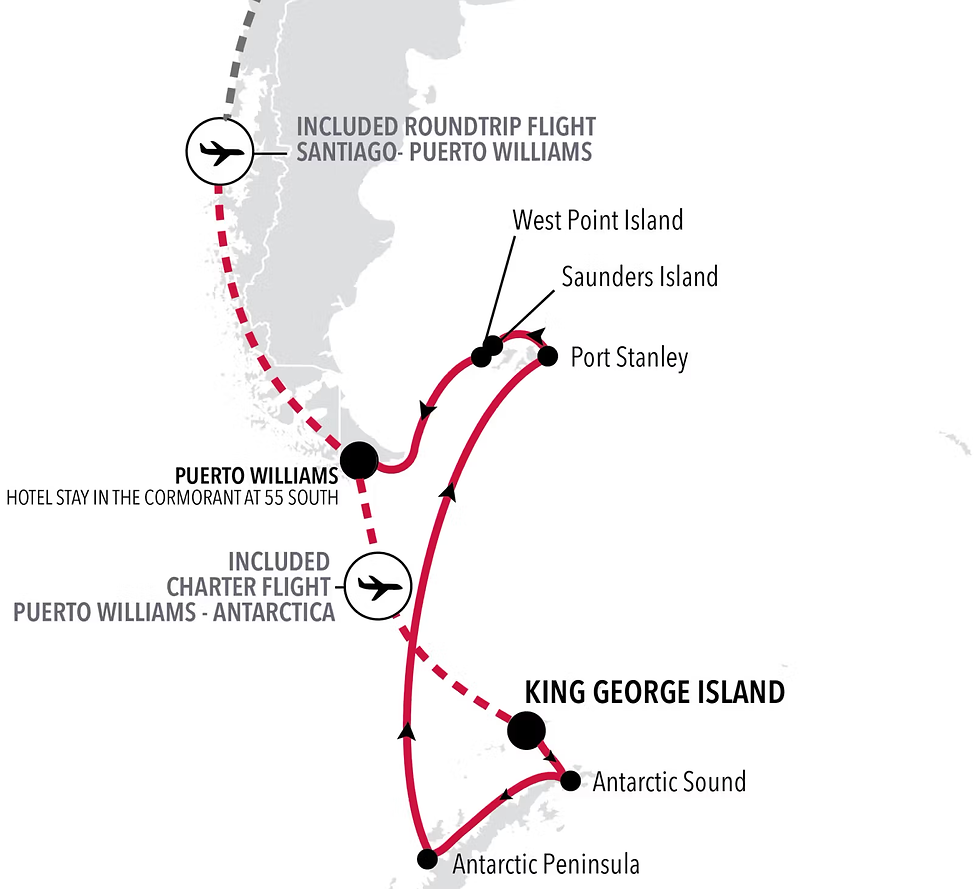
So which is better, sail or fly? Neither is “better” – they’re just different ways to begin the same extraordinary adventure. One builds the suspense and sense of achievement; the other whisks you straight to the action in comfort. Many cruise lines even offer combo itineraries where you fly one way and sail the other, giving you the best of both worlds (skipping one Drake crossing to save time, while still experiencing the ocean voyage in one direction).
Other Remote Routes: A few intrepid travelers explore Antarctica via less common routes. For example, some voyages depart from New Zealand or Australia to explore the remote Ross Sea (often 25–30+ days, and only on true icebreaker ships), or even include land expeditions to the South Pole or flights into Antarctica’s interior. These specialized itineraries are typically quite long, expensive, and require prior expedition experience – they’re geared to serious adventurers or “second timers” who have seen the Peninsula and want more. For most travelers, though, the primary decision is sail vs. fly from South America.
Antarctica Cruise Routes: Choosing Your Adventure
Your specific cruise route determines what you’ll see, how remote you get, and the overall focus of your trip. Here are the main Antarctica cruise routes and what makes each unique:
Classic Antarctic Peninsula (Most Popular, 10–14 days): If it’s your first time to Antarctica, this is the quintessential route. You’ll stick to the Antarctic Peninsula, the northernmost part of the continent, which offers a perfect balance of jaw-dropping scenery and amazing wildlife. Expect to see dramatic glaciers, sculpted icebergs, busy penguin colonies, seals, whales, and stunning mountain-lined channels. This itinerary typically departs from Ushuaia (with that exciting Drake Passage crossing) or, for some operators, includes the fly-in from Chile to maximize your time on the Peninsula. It’s the best introduction to Antarctica.
Antarctic Fly-Cruise (8–10 days): Often called an Air-Cruise, this is a modified version of the classic Peninsula trip for those who want more time exploring and less time traveling. You fly from Chile to Antarctica (usually landing on King George Island), then spend about a week cruising the Antarctic Peninsula before flying back. With no sea days, nearly the entire trip is spent in and around Antarctica. It’s a more expensive option, but rewards you with more time on the ice. It’s also appealing if you’re concerned about the Drake’s rough seas. Best for travelers with limited time or those who want to skip the Drake Passage. (Note: flexibility is required, as flights depend on weather, but tour operators build in buffer days to accommodate potential delays.)
Antarctic Circle (“Polar Circle”) Expedition (12–14 days): A deeper push south along the Peninsula, aiming to cross the Antarctic Circle (~66.5° South). Typically only possible later in the season (January–March) when sea ice has retreated, these voyages venture into more remote and icy waters with fewer other ships around. You’ll see similar wildlife as the Peninsula trips but possibly explore more isolated bays and rarely visited research outposts. Great for second-time visitors or anyone seeking to go a little farther off the beaten path. Duration is similar to or slightly longer than a standard Peninsula cruise.
South Georgia & Falkland Islands Add-On (18–24 days): Considered by many the ultimate wildlife expedition, these longer itineraries combine the Antarctic Peninsula with visits to the Falkland Islands and South Georgia. You’ll need extra vacation time, but you’ll be rewarded with the best wildlife spectacle on the planet: think tens of thousands of king penguins on a single beach in South Georgia, massive elephant seal colonies, and the rich history of Ernest Shackleton’s expeditions. If you’re passionate about wildlife (especially penguins!) and have the time, this route is unbeatable for biodiversity and epic scale.
“Basecamp” Expeditions: Some trips are designed around outdoor activities – things like sea kayaking through icebergs, hiking up Antarctic peaks, overnight camping on the ice, paddleboarding, even polar scuba diving. On these voyages (sometimes called “Basecamp” itineraries by certain operators), the emphasis is on maximizing active adventure and unique experiences off the ship, rather than covering huge distances. These typically last around 12–14 days on the Antarctic Peninsula and attract travelers who want to not just see Antarctica, but truly engage with it.
Weddell Sea & Ross Sea (Most Remote Regions): These less-common routes take you into deep expedition territory. The Weddell Sea (on the eastern side of the Peninsula) is famed for its thick sea ice and was the site of Shackleton’s Endurance expedition – a few rare trips here may even try to spot emperor penguins. The Ross Sea – accessible from New Zealand – is far longer (30+ days) and showcases historic huts from the Heroic Age of exploration and massive ice shelves. These trips are only for seasoned travelers seeking the farthest frontiers, often on specialized icebreaker ships or with flight support. They’re incredible but require a substantial commitment of time and resources.
Extended “Grand Voyages”: Some cruise lines offer extended expeditions that link multiple regions. For example, you might find an itinerary that starts in Patagonia or Chile’s fjords, continues to Antarctica, then on to the Falklands and South Georgia – a sweeping journey of 3–4 weeks or more exploring the Southern Ocean’s highlights. These can be wonderful for those who want to see everything in one go.
Each route has its own appeal. I help my clients choose an itinerary that matches their interests, timeframe, and comfort level. Whether you want the classic highlights or a longer odyssey, there’s a perfect Antarctica adventure for you.
Choosing the Right Ship for Your Expedition

Selecting your expedition ship is just as important as choosing your route. Ship size and style directly impact your daily experience in Antarctica in ways many travelers don’t realize.
Why Ship Size Matters: Antarctica has strict guidelines to protect its fragile environment. According to IAATO (International Association of Antarctica Tour Operators) rules, only 100 passengers can be on shore at any landing site at once. This means if your ship carries more than 100 guests, shore landings must happen in rotations. On a small ship (fewer than ~100 guests), everyone can go ashore together, maximizing your time on land. On a ship with, say, 150 guests, you’ll likely go ashore in two groups – half exploring while the other half waits their turn (or perhaps does a Zodiac cruise). On even larger vessels (200+ guests), you might have three or more rotations, meaning less time on land and more time waiting. And importantly, ships with over 500 passengers are not permitted to land anyone at all in Antarctica – those big cruise liners can only offer scenic cruising from onboard.
For most travelers, the “sweet spot” is in the 100–200 passenger range. Within that, ships around 120–180 guests tend to offer an ideal balance: they’re small enough to keep landings efficient and group sizes intimate, while still large enough to have excellent amenities, stability in rough seas, and a variety of cabin options. Ships closer to the 200-250 passenger mark can still be comfortable (often very luxurious), but expect to have more time on the ship and potentially only one landing or shorter stays on shore each day.
Luxury vs. Premium vs. Expedition Ships:
Beyond size, Antarctic vessels come in different styles of service and comfort:

Luxury Expedition Ships (Top Comfort & Service):
These are like five-star boutique hotels at sea – spacious suites, gourmet dining (often with free-flowing champagne and wine), and a high staff-to-guest ratio – combined with serious expedition capabilities (ice-strengthened hulls, advanced navigation systems, plenty of Zodiacs, and expert expedition teams).
You do not sacrifice comfort on these voyages. Many luxury ships are brand-new (launched 2018–2023) and feature bonus toys like submarines and helicopters for exclusive adventures (e.g., Scenic Eclipse offers both, Seabourn Venture has two submersibles on board, and Silversea’s Silver Endeavour even uses private charter jets for its Antarctic fly-cruises).
Examples of luxury expedition ships:
Seabourn Venture, Seabourn Pursuit; Silversea’s Silver Endeavour and Silver Cloud; Scenic Eclipse I & II; Lindblad/National Geographic Endurance & Resolution; Ponant’s Le Commandant Charcot (the world’s only luxury icebreaking ship).
Best for travelers who want to explore Antarctica in style – enjoying off-ship adventures by day and indulging in fine cuisine, top-notch service (even butlers on Silversea), spa, and suite amenities by night.
Premium Expedition Ships (Balanced Comfort & Exploration):
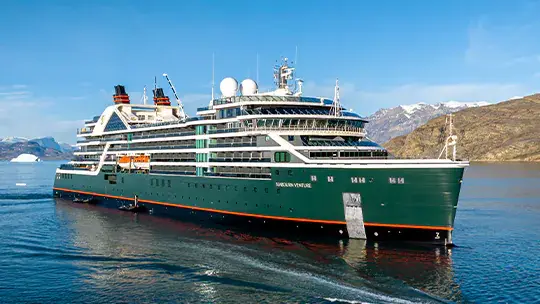
These vessels offer a blend of upscale comfort and strong focus on exploration. They might not be as opulent as the luxury lines, but they are very comfortable (often new or recently built) and designed for efficient polar operations with cutting-edge technology like advanced stabilizers or X-bow designs for smoother sailing. Many carry around 130–180 guests, keeping the expedition groups fairly intimate.
Examples:
Quark Expeditions’ Ultramarine (with helicopters), Swan Hellenic’s SH Vega and SH Diana, Atlas Ocean Voyages’ World Traveller, Aurora Expeditions’ Greg Mortimer & Sylvia Earle, and Lindblad/NatGeo Orion. These typically include quite a lot in their fares (often pre-cruise hotel nights, excursions, sometimes drinks) and have excellent guides.
Best for travelers who want a hybrid of immersion and comfort – you’ll get plenty of time ashore and a convivial small-ship atmosphere, but still enjoy refined accommodations and service.
Classic Expedition Ships (Authentic & Adventure-Focused):

These are generally smaller, 50 to 150-passenger vessels with fewer frills that put pure exploration first. They get everyone off the ship quickly via a high ratio of Zodiacs to guests, and they often have a very adventurous spirit on board (think an atmosphere of exploration, daily briefings, emphasis on science and nature). Cabins and cuisine are comfortable but simpler; extras like alcoholic drinks or Wi-Fi may cost extra.
Examples:
Oceanwide Expeditions’ Hondius, Ortelius, and Plancius, or Quark’s Ocean Adventurer and Ocean Nova (a 70-passenger former research vessel).
Fantastic for travelers who prioritize maximum time in the field and a casual, go-anywhere expedition vibe over onboard luxury.
No matter which ship style you choose, every expedition ship heading to Antarctica is purpose-built or adapted for polar conditions: they have ice-strengthened hulls, experienced crews, expert naturalist guides, and fleets of Zodiac boats to shuttle you to shore. So rest assured, you’ll get safely and comfortably into the heart of the action. The differences come down to how you want to travel – in plush luxury, in a hybrid of comfort and adventure, or in a minimalist expedition style. Think about your travel preferences, then choose the ship that aligns best with your style and priorities.
(Tip: If you’re really interested in extras like helicopter flights, submarine dives, or exclusive onboard amenities, focus on the newer luxury ships that offer them. But if you know you’ll spend all your time outdoors and won’t use those add-ons, you might save by picking a simpler vessel. More on balancing cost vs value below.)
What Does an Antarctica Cruise Cost?

Let’s address the big question: cost. There’s no way around it – an Antarctic cruise is a significant investment, often among the most expensive trips you’ll ever take. However, it’s also one of the most unforgettable journeys you can experience, and travelers often say the investment is absolutely worth it.
Here’s a rough idea of typical costs per person (double occupancy) for an Antarctica cruise, based on the style of ship and length of trip (as of recent pricing):
Luxury Expedition Cruises:
Approximately $1,500 – $3,000 per person, per day. These higher fares usually include flights or pre-cruise hotel nights, all meals, premium wine and spirits, gratuities, and top-tier service. For a 10–14 day luxury Antarctica cruise, expect a total starting from roughly $15,000 per person, with more exclusive or longer itineraries (or higher suite categories) ranging up to $30,000 or more.
Premium/Comfort Expedition Cruises:
Around $1,000 – $1,800 per person, per day. Many of these trips still include a lot (like excursions, hotels, sometimes alcoholic beverages), but perhaps fewer frills or a bit less opulence. A typical 10–14 day premium adventure might cost roughly $10,000 – $18,000 per person, depending on the ship and season.
Classic Expedition Cruises:
Approximately $800 – $1,500 per person, per day. These are often the most affordable options, with a focus on core inclusions (meals, landings, guide team) but other extras costing more. A 10–12 day trip might start around $8,000 – $12,000 per person in a twin share cabin. Some ultra-basic options (like longer lead times or shared accommodations) might dip below this range, but expect to pay at least several thousand dollars for any Antarctic expedition.
Key factors that drive cost include the length of the trip, the ship’s category (luxury vs expedition), your cabin category (suites cost more), the time of season (peak season holidays command higher prices), and whether the itinerary includes special additions like flights or expensive destinations (e.g., including South Georgia or a fly-cruise option). Early booking vs last-minute deals also affects price; many lines offer early-bird discounts a year or two in advance, whereas procrastinating might mean higher fares or sold-out cabins later.
To give you some context, here are a few sample price points for upcoming Antarctica cruises (per person, double occupancy):
Seabourn Venture (13-night Expedition Cruise) – from around $18,000 per person for a suite (Buenos Aires to Antarctica round-trip). Includes ultra-luxury accommodations, all meals, top-shelf beverages, onboard gratuities, expert expedition team, Zodiac landings, and often extra perks like spa credits.
Silversea’s Silver Endeavour (6-night Antarctic Fly-Cruise) – approx. $21,000–$22,000 per person for a suite. Features a fly-in to King George Island saving four days at sea. Price includes the private charter flights, all-inclusive luxury onboard (butler service, gourmet dining, wine & spirits, etc.), and guided excursions. Short and exclusive, with promotions sometimes reducing fares by up to 30–40% for early bookings.
Lindblad/National Geographic Endurance (11-day Voyage to Antarctica) – from roughly $19,000 per person for a standard cabin (longer trips or suites can be $25,000+). Includes a comprehensive package: often charter flights or recommended group airfare, one hotel night in Buenos Aires or Santiago, veteran expedition leaders, photography coaching, all excursions, and high-caliber lectures. Lindblad’s pricing is usually more all-inclusive and they do not discount heavily, so the value lies in the depth of experience.
Swan Hellenic SH Diana (11-day Classic Antarctica) – around $10,000 – $12,000 per person in a balcony cabin. This premium-luxury hybrid includes a pre-cruise hotel night in Buenos Aires, charter flights to the ship in Ushuaia, all excursions, open bar, Wi-Fi, and even your expedition parka and photography gear like a waterproof bag. It’s a great luxury value option, offering an experience close to the ultra-luxury lines but at a lower fare.
Atlas Ocean Voyages World Traveller (9-night Antarctic Discovery) – around $13,000 – $15,000 per person for a suite. Atlas operates intimate yacht-style expedition ships and often runs promotions (like including airfare credits or hotel nights). Fares include excursions, drinks, gratuities, and some Wi-Fi, providing a relaxed, all-in-one package at a moderate luxury level.
Bottom line: An Antarctica cruise is generally in the $12,000 – $30,000+ per person range. Ultra-luxury trips (especially those with flights or very long itineraries) will be on the higher end, while classic expeditions on simpler ships can be on the lower end of the spectrum.
Plan your budget realistically, and remember to factor in not just the cruise fare but also international flights to your embarkation point (e.g., flights to Argentina or Chile from home), plus any necessary gear (many lines provide parkas and boots, but not always everything), and comprehensive insurance (more on that below).
Getting the Best Value for Your Money
When choosing among pricey Antarctic options, the goal isn’t necessarily to spend less – it’s to spend wisely on the experience that matters most to you:
Don’t pay for features you won’t use. For instance, if you have no intention of taking a helicopter flight or submarine dive, you might not need the ship that includes those bells and whistles – you could opt for a slightly simpler ship and save significantly. On the other hand, if fine dining and a balcony suite are crucial to you, it might be worth upgrading to a luxury line that provides that 24/7 pampering.
Consider time on shore vs onboard experience. If you know you want to spend max time ashore each day, a smaller expedition ship (and/or one carrying fewer than ~150 passengers) is likely a better value for you. If you’re content with one long landing per day and love spa afternoons and gourmet meals, a larger luxury ship (200+ guests) might be perfectly satisfying.
Look at inclusions. Many higher-end trips include perks that add value – charter flights, hotel overnights, all gratuities, open bars, gear like jackets, etc. – so although their sticker price is higher, your out-of-pocket spending on the trip will be lower. With more “basic” expeditions, you may have to pay extra for things like bar drinks, internet access, or even charter flights to the port; so factor those into the true cost.
Special deals and timing. Booking early (12–18 months out) often unlocks early booking discounts or added benefits. Conversely, a few expedition companies sometimes offer last-minute deals if they have unsold cabins close to departure – but that’s risky for a destination like Antarctica, which many people book well in advance to secure their spots.
Remember: In Antarctica, the experience is the reward. Prioritize what will make the trip special for you, whether that’s the highest level of luxury or the longest possible itinerary or maybe a bit of both. As your travel advisor, I can help identify which options match your priorities and get you the best value.
When Is the Best Time to Go?

The best time to visit Antarctica is during the Austral summer (late October through March) – this is when the region is accessible to expedition ships. But within that window, Antarctica changes dramatically, and what you see depends on when you go. There’s no single “perfect” time; rather, each part of the season has its own highlights.
Here’s a breakdown of Antarctica’s travel season to help match your trip timing with your interests:
Early Season: Late October & November – Pristine Landscapes
Pros:
Pristine scenery: Antarctica is freshly blanketed in undisturbed snow and ice. The landscapes are pure white, and you’ll leave the first footprints of the season at landing sites. This is the best time for breathtaking photography of immaculate snowscapes and dramatic ice formations.
Fewer visitors: Early in the season, very few ships are around, so you may have popular landing spots all to yourself.
Wildlife courtship: It’s the start of the breeding season. Penguins are arriving at rookeries, engaging in courtship and nest-building. It’s fascinating to watch their behaviors.
Crisp atmosphere: Cool temperatures and brilliant austral spring light can create dazzling scenes, with icebergs in fantastic shapes.
Cons:
Colder weather: Spring in Antarctica is colder and more unpredictable; pack extra layers and expect some chill winds.
Limited wildlife activity: Penguin chicks haven’t hatched yet in November, and whales are still on their way south, so you’ll see fewer whales now than later in the season.
Ice limiting access: Some landing sites (especially further south) might still be blocked by winter sea ice until later in the season, potentially limiting how far south your ship can explore.
Best for: Photography enthusiasts, nature lovers seeking the most untouched, “classic Antarctica” scenery, and those who want that sense of being among the first to arrive for the year.
High Summer: December & January – Peak Wildlife & 24-Hour Daylight
Pros:
Abundant wildlife: This is peak season for wildlife. Penguin chicks begin to hatch in mid/late December and colonies become a frenzy of activity (and adorable baby penguins). You’ll also see plenty of seals and seabirds, and whales are arriving in greater numbers by January.
Milder weather & long days: Temperatures are at their warmest (still chilly, but often just around freezing or a bit above) and Antarctica enjoys nearly 24 hours of daylight around the solstice. That means more time for landings and exploration.
Full access: Most landing sites, even in the Antarctic Circle or Weddell Sea, become accessible as the sea ice has retreated by this time.
All-around experience: Overall, these months offer a balance of everything: extensive wildlife, beautiful landscapes (though not as pristine as earlier), and decent weather.
Cons:
Most popular = more competition: This is when ships are fullest and book up earliest. You might encounter other groups at popular sites (though coordination between ships usually keeps things feeling uncrowded).
Higher prices: Peak season holidays (especially Christmas/New Year’s) often have premium pricing due to demand. If you’re interested in a December or January cruise, I recommend planning well in advance to lock in your cabin and any early booking promotions.
Less new snow: By January, much of the lower coastal areas are snow-free or trampled by wildlife and earlier visitors, so the scenery can be muddier around penguin colonies (but still amazing).
Best for: First-time visitors who want the quintessential Antarctica experience, families (many travel over the holidays), or anyone who prioritizes prime wildlife viewing and doesn’t mind a busier season.
Late Summer: February & Early March – Whales & Final Frontier Feel
Pros:
Incredible whale watching: This is the best time for whale sightings. Large numbers of humpback, minke, and orcas gather to feed in the nutrient-rich waters. You might experience magical moments like whales bubble-net feeding or breaching near your Zodiac.
Penguin action continues: By February, penguin chicks are growing up – you’ll see them molting into adult feathers and practicing swimming. You may even witness the comical scene of adolescent penguins chasing their parents for food.
Fewer crowds: Some ships begin leaving by mid/late February, so there are generally fewer visitors in Antarctica compared to peak season, giving a slightly more secluded feel again.
Beautiful light & open water: As the sun starts to set again (by late February you’ll get dusks and dawns), photographers love the golden light conditions. More sea ice has broken up, meaning your ship can sometimes venture further or explore different areas, and striking icebergs are plentiful.
Cons:
Less pristine snow: After months of summer, the snow on frequently visited beaches isn’t as untouched—colonies can be muddier as melting occurs and penguin rookeries have been active.
Shortening days: By March, darkness returns for a few hours each night, and temperatures begin to drop. Weather can start to turn as autumn approaches, and some expeditions stop running by mid-March.
Best for: Wildlife enthusiasts and whale lovers, photographers (thanks to dramatic lighting), and those who don’t mind slightly cooler conditions in exchange for rich marine life encounters and somewhat smaller crowds.
Essential Planning Tips for an Antarctic Cruise

Planning an Antarctica cruise can be complex, but the right preparation ensures a smooth, safe, and truly rewarding journey. Here are some key considerations and insider tips for prospective travelers:
Travel Insurance & Medical Evacuation: Virtually all Antarctic cruise operators **require each passenger to have comprehensive travel insurance that includes emergency medical evacuation coverage (often a minimum of $200,000–$250,000). This is absolutely crucial due to the remote location – if you were to fall seriously ill or injured in Antarctica, evacuation comes via specialized aircraft or ship and can cost hundreds of thousands of dollars. Additionally, a good travel insurance policy can cover trip cancellation, interruptions, or delays (which, in a place like Antarctica, can happen due to weather). I strongly encourage my clients to arrange this coverage well ahead of time for peace of mind.
Physical & Mobility Considerations: You do not need to be an athlete to enjoy an Antarctic cruise, but some basic mobility and fitness are needed. Passengers should be able to climb up and down steep ship gangways, get in and out of Zodiac rafts (usually with staff assistance), and walk over uneven, sometimes slippery terrain (snow, pebbles, mud) during shore landings. If you use a wheelchair or have significant mobility limitations, a traditional Antarctic expedition might not be suitable because of those logistics. Discuss any concerns with your travel advisor and cruise operator – they can guide you to the most accommodating options.
Flexibility with Itinerary & Timing: Weather rules in Antarctica. Even in summer, conditions can change rapidly, and plans might need to adapt. If you choose a fly-in itinerary, know that flights to Antarctica are subject to delays if weather on the ice runway isn’t favorable – you might spend an extra day or two in Chile waiting for the sky to clear (cruise companies will take care of you, but patience is required). Similarly, expedition ships may need to adjust their landing schedule or even skip a particular site if sea, ice, or wildlife conditions dictate. Be mentally prepared for changes – it’s all part of true expedition travel. (This is also why some cushion of extra days at the end of your trip is wise, just in case your return is delayed.)
Gear Up Properly: Dressing right is key to enjoying Antarctica. Plan to wear warm layers (thermal base layers, insulating mid-layers, and a waterproof/windproof outer shell). Most high-end cruises will provide you with a quality expedition parka/jacket to keep, and many lend you knee-high waterproof boots for landings (so you don’t have to pack those). However, you’ll typically need to bring other essentials like insulated pants, gloves, hats, neck gaiters, and good sunglasses (the sun’s glare off the ice is intense). Don’t worry – I provide my clients with detailed packing lists and many ships also give guidance on what to bring. Also, if you’re sailing across the Drake, consider bringing seasickness remedies (motion sickness meds or patches) just in case those waves kick up.
Book Early & Work with an Expert: Antarctic cruises are small-ship experiences with limited space. Many top itineraries and cabins sell out 1–2 years in advance, especially for peak season or special routes. Planning early is highly recommended to secure your preferred ship, dates, and any pre-cruise arrangements (like business-class flights using miles, or add-ons in South America). An experienced travel advisor (like myself) can help navigate the many choices – from picking the right route and ship to handling all the complex logistics (flights, hotels, insurance) and even preparing you with insider tips. This is not a trip you want to leave to a generic booking engine; personal expertise will ensure you get the Antarctica experience you’ve been dreaming about.
Final Thoughts
Antarctica isn’t just a place on the map—it’s an experience that will stay with you forever. It truly is the ultimate journey for many travelers, and careful planning turns it from a good trip into the right trip for you. There are some important trade-offs and choices to make – whether to sail the Drake Passage or fly to Antarctica, whether to go for a shorter trip or a longer immersive expedition, whether you’re more keen on wildlife or certain landscapes, and how much luxury vs. adventure you desire. Each decision shapes your journey in different ways.
At some point in the planning process, it stops being about logistics and starts becoming real. You picture yourself stepping onto the ice for the first time. You imagine the complete, otherworldly silence. The staggering scale of the icebergs and mountains around you. The moment you realize just how far from the everyday world you are. That’s when it clicks: this isn’t just another trip. It’s a once-in-a-lifetime adventure that will forever change your perspective.
If you’re ready to start planning or have questions about making your Antarctica dreams come true, I’m here to help. As a luxury travel advisor with personal expedition experience, I can guide you through every step – from selecting the perfect route and ship to ensuring you’re fully prepared for this epic journey. Get in touch, and let’s craft your ultimate Antarctic expedition together.
Safe travels, and see you on the White Continent!
Warmly,
Janette Jahoda
Luxury Travel Advisor – Global Travel Collection
📞 623-748-4527 | ✉️ Janette.Jahoda@GlobalTravelCollection.com
Learn more about my polar travels and services on my https://www.luxcruiseadvisor.com/about.


Comments